
Fielded in March 2026, we took Washingtonians’ pulse a month post-winning the Super Bowl. With a view of the celebrations and festivities from our office in Pioneer Square and insights from our latest statewide survey, it’s hard to deny the emergence of Washington sports as a source of hope and community for residents here.
The big picture.
As noted in our previous blog post, pessimism about the nation runs deep, but Washington residents are quietly building something more hopeful closer to home.
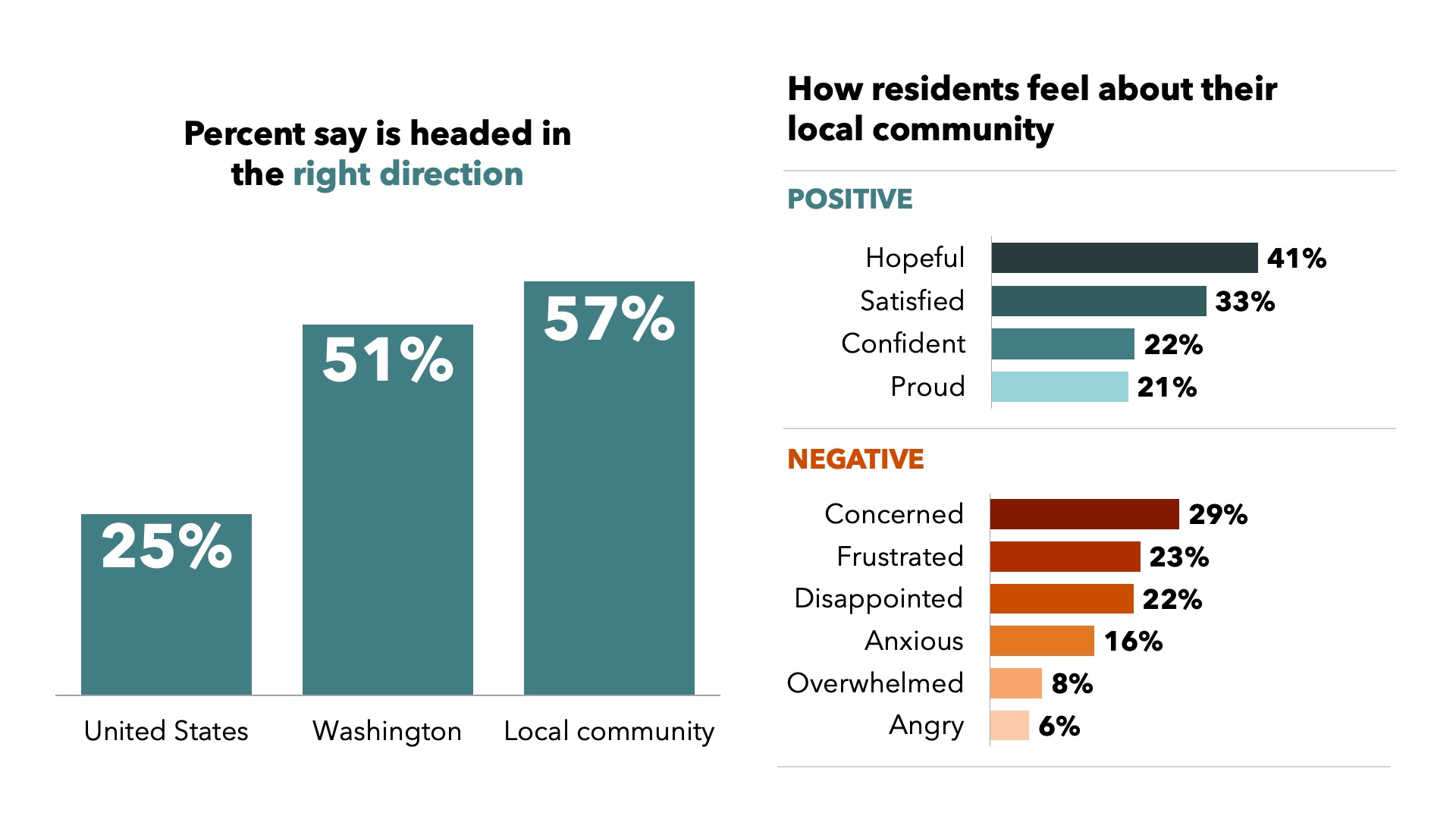
When asked whether things are headed in the right direction or the wrong track, residents are more optimistic about the direction their local community is heading in (57%) than about Washington state (51%) or the United States (25%). Hopeful was the most common emotion invoked when residents thought about their local community.
Seattle sports are so back.
Since February, the streets of Seattle have seen celebration, connection, and lots of preparation. The city warmly welcomed back the Seahawks after taking home the Super Bowl XL trophy. Fans have been crowding T-Mobile Park after a generational season for the Mariners—who won their first American League West divisional title since 2001. There’s even talk of the SuperSonics returning to Seattle. With the city hosting six FIFA World Cup matches at Lumen Field, Seattle has invited the rest of the world to join in on the fun this June and July.
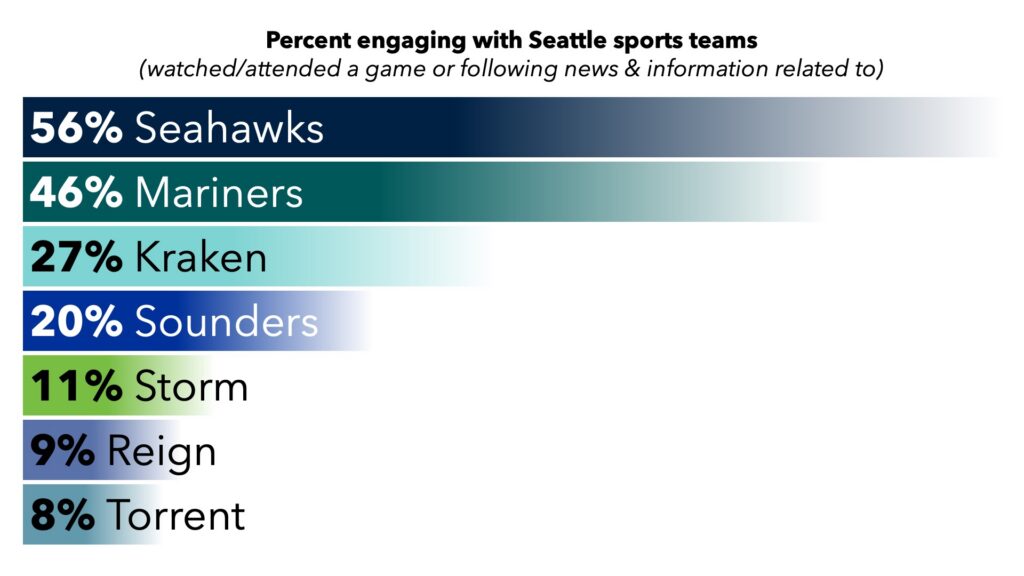
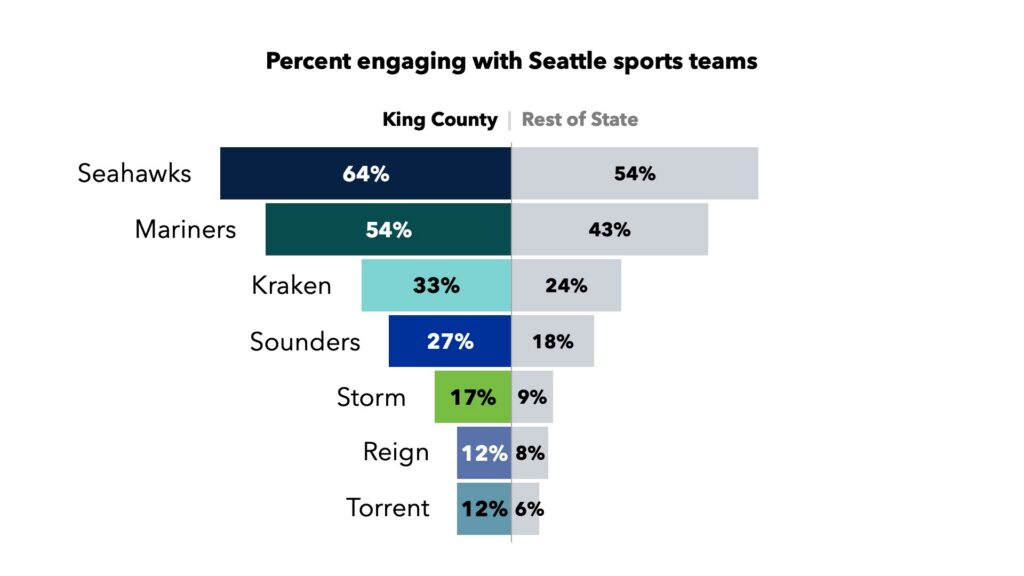
Unsurprisingly, more than half (56%) of Washington residents have either watched/attended a game or followed news and information related to the Seahawks. The top three most engaged with Seattle sports teams are the Seahawks, Mariners (46%), and Kraken (27%). Levels of engagement for these teams across King County and the rest of the state are not significantly different—perhaps residents perceive them as state/region representatives, rather than the city itself.
Compared with residents of the rest of the state, King County residents are more likely to show up for up-and-coming women’s teams—like the Torrent (12%) and Storm (17%). The Torrent set the U.S. arena record for a women’s hockey game in November 2025 with their inaugural home opener—drawing 16,014 fans to Climate Pledge Arena. This record has been broken yet again by the Torrent (and New York Sirens) in April, where 18,006 fans sold out Madison Square Garden.
Soccer, Innovation, Everyone.
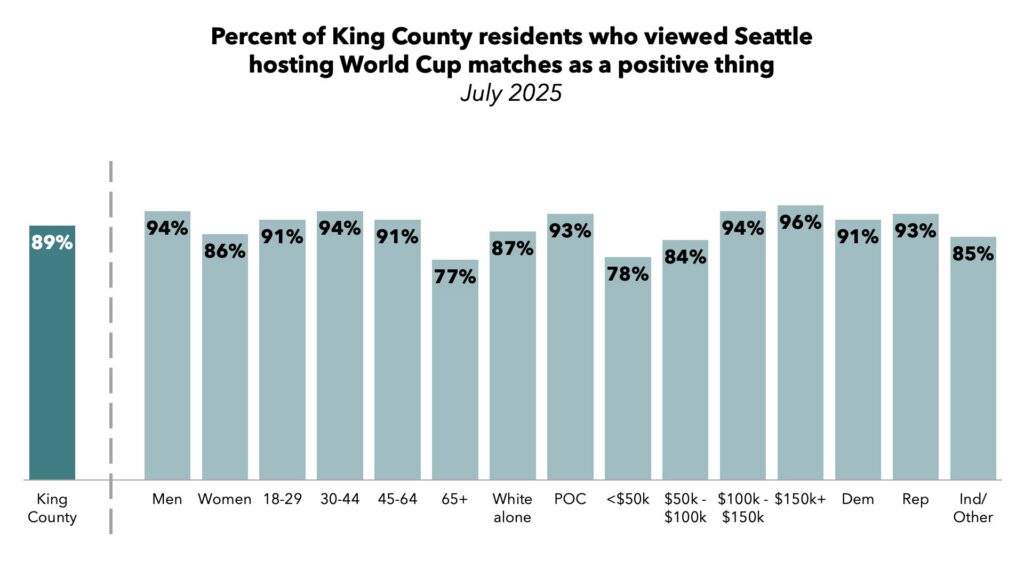
King County residents are also more likely to keep up with the FIFA World Cup (31%). In a Pulse from last July, we found that the excitement rang true for residents across Washington—nearly 9 in 10 Washington residents viewed Seattle’s host city status positively, with enthusiasm especially high among King County residents.
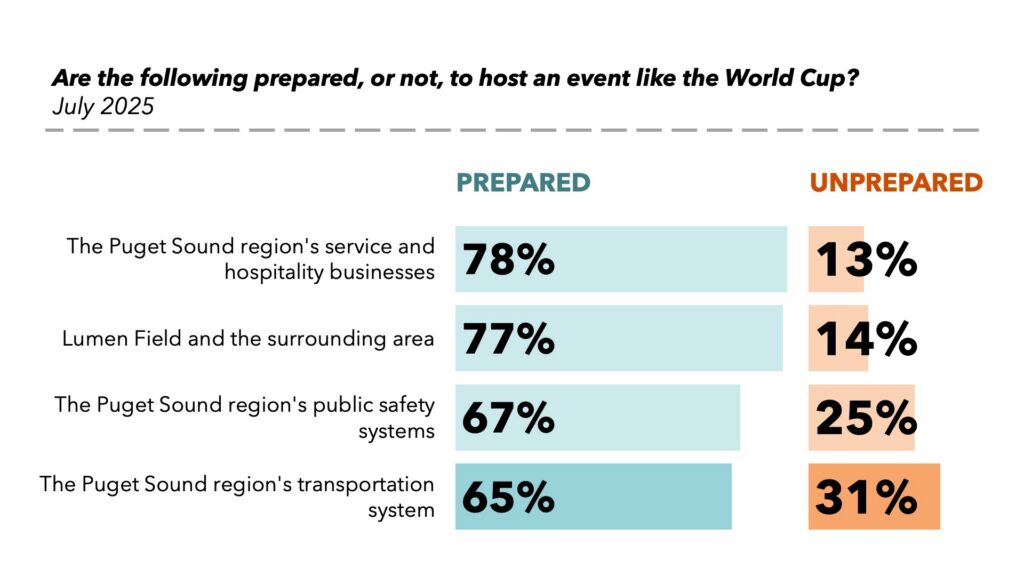
Previously, perceptions of Puget Sound’s readiness for the World Cup were the lowest for transportation systems. Almost a third (31%) of King County residents felt that the region’s transportation infrastructure was unprepared to host an event like the World Cup.
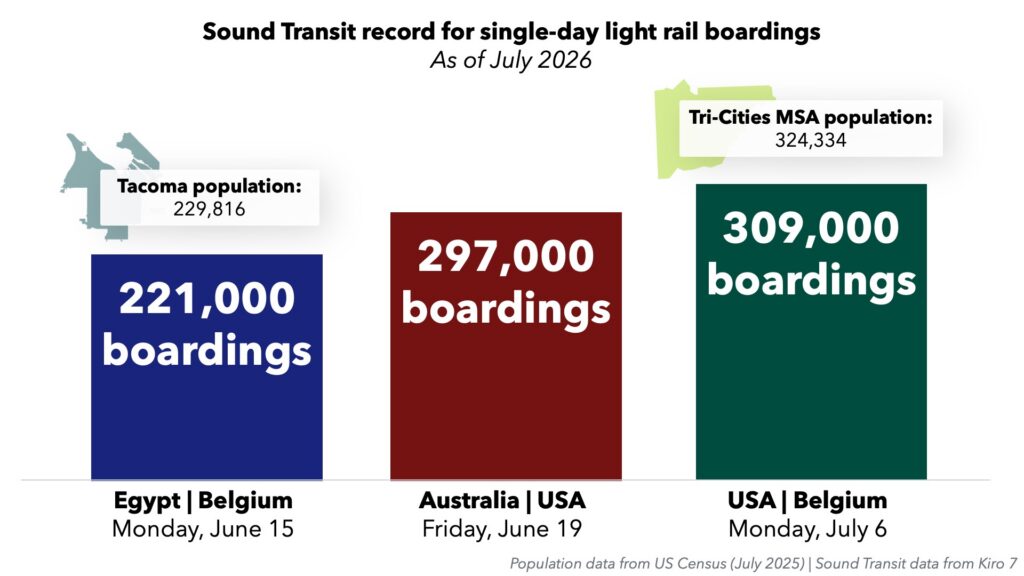
However, public transit seems to have geared up in preparation for Seattle’s ‘Summer of Soccer.’ In just one week, Sound Transit broke their record for single-day light rail boardings twice. The Egypt-Belgium match saw 221,000 boardings, which was promptly overshadowed four days later by the 297,000 recorded for the Australia-USA match. The record was shattered once again by the USA-Belgium game—reporting around 309,000 boardings in total.
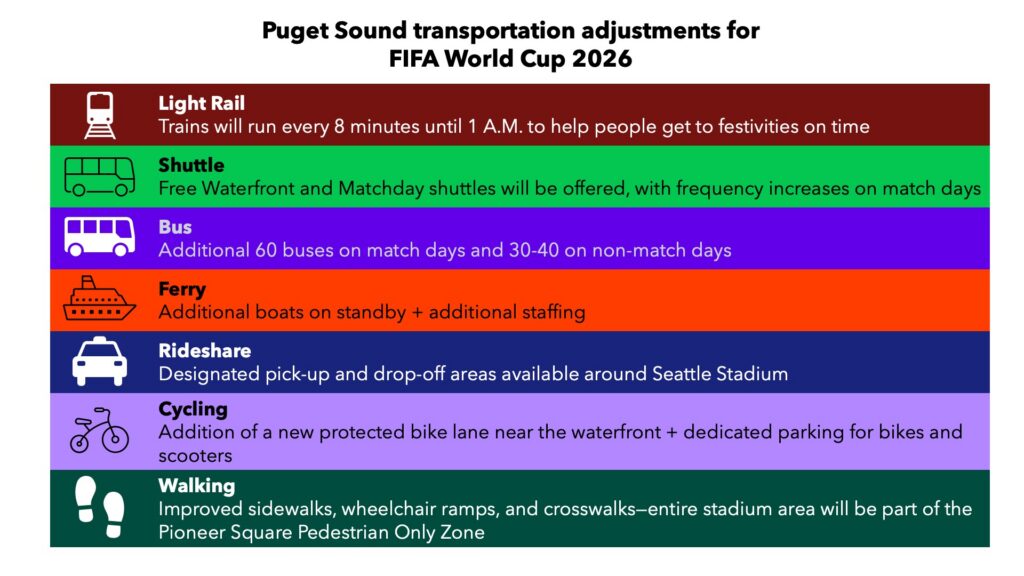
In contrast to residents’ low expectations, the Puget Sound transportation system seems to have covered all the tracks to ensure a fun, safe, and accessible experience for the city and surrounding areas: light rail, shuttles, metro buses, ferry, rideshare, cycling, and walking.
Sports as a shield.
In a time of national and federal change, many Washingtonians are drawing optimism from the things that bring their communities together—81% of residents say they have watched, attended (or plan to attend), and follow news and information related to major sports.
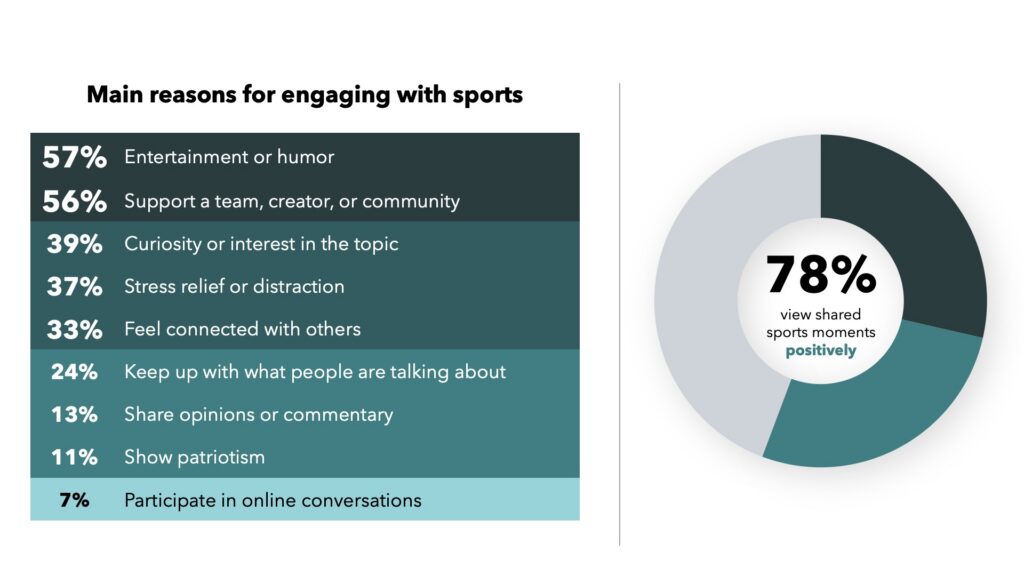
When asked why they choose to engage with sports, residents cited entertainment/humor (57%) as the top reason—with support for a team/creator/community (56%) trailing closely behind. More than three-fourths (78%) of residents view their community’s engagement in shared sports moments positively, with 40% finding them very positive.
Overall, about two in five (41%) residents feel hopeful when thinking of their local community—more than any other emotion. That optimism is closely tied to sports: 30% of residents are hopeful and follow at least one Seattle team, compared with just 11% who are hopeful but follow none. Put another way, nearly three-quarters (72%) of hopeful residents keep up with at least one team.
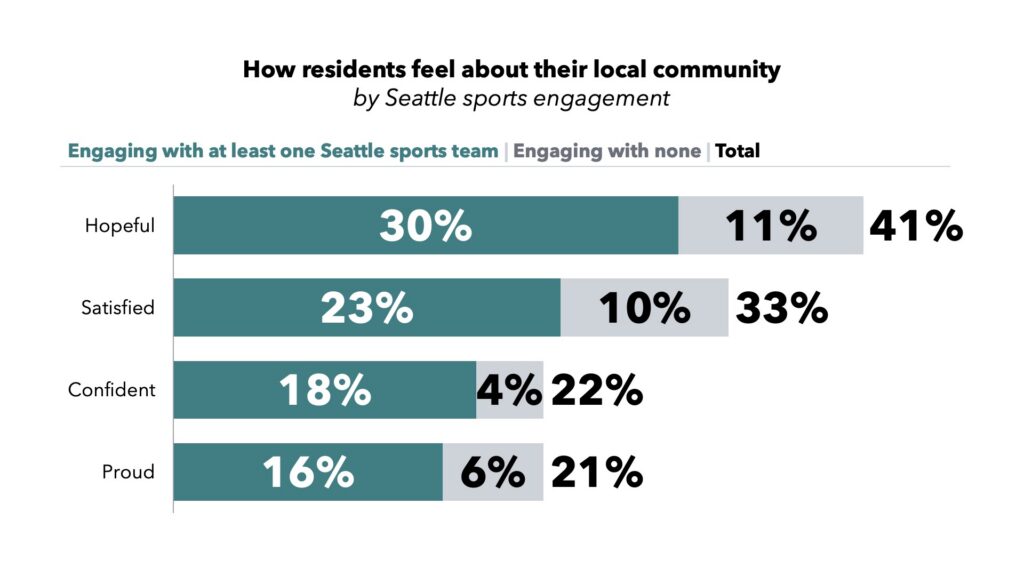
While the USMNT may have ended their FIFA World Cup 2026 run a tad earlier than the nation wanted, it’s much more than we ever expected. Washington has dealt with this kind of loss before—just ask any Mariners fan. So naturally, they know what to do: turn to their neighbors, rely on their community, and just keep holding on. Fans and residents alike aren’t drawing back in retreat, but rather in renewal. That small bit of resilience and optimism is worth maintaining amid this time of national gloom.
Written by: Hân Huynh
About the Survey
Data from DHM Research’s Washington Pulse Survey, conducted March 17–25, 2026, among N=500 Washington residents (margin of error ±4.4%).